


DRILLING + FIXING TECHNOLOGY WITH A BIG PLUS! WITH A BIG PLUS!

Grind & Mix
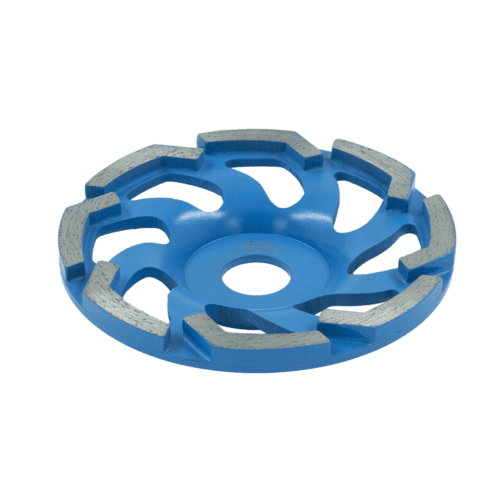
Concrete grinding begins with the right drive disc. In this category, you will find planing discs for the removal and levelling of concrete and stone, from correction work to preparation for coating or levelling compound. Choose based on the substrate, desired finish, and machine. Need help? We are happy to assist with the right choice.

DIAMOND³ WGK 125 incl. PRCD
Cutting discs for 115/125 mm angle grinders200078Diamond grinding disc 50 mm x M14
For Concrete 5 segments1020051Diamond cutting disc 70 mm x M14 EB
For concrete, plastered only1020070Diamond grinding disc 100 mm x M14 Turbo
For Concrete Turbo1020100Diamond Cutting Disc 125 mm x 22.2 mm Turbo
For Concrete Turbo1020125Diamond Frets Epoxy 125 mm 22.2 mm
1023124Diamond Cutting Disc 125 mm x 22.2 mm EX
1023127Diamond abrasive disc 125 mm x 22.2 mm DBL
For concrete, double-sided. Low1023125LDiamond cutting disc 125 mm x 22.2 mm DBS
Wear-resistant Double occupier1023125SDiamond cutting disc 125 mm x 22.2 mm DB
For concrete, double-coated1023125Diamond cutting disc 180 mm x 22.2 mm DB
For concrete, double-coated1023180DIAMOND³® Automixer® Premium MT
230V/50Hz for Bricklayers404044DIAMOND³® Automixer® Premium TZ
230V/50Hz for Tile Fitters404045DIAMOND³® Automixer® Premium ST
230V/50Hz for plasterers404055Black tub 45 litres.
For DIAMOND³® Automixer® Premium404047White tub 45 litres.
For DIAMOND³® Automixer® Premium404048




When do you choose to grind
Sharpening is ideal for
Unevennesses, ridges and “heads” in concrete
Removal of adhesive residues, coatings, paint and cement haze
Preparing the surface for a new finish
Chamfers and edge corrections
Tip: The right choice depends on the surface (hard/soft), desired finish (coarse/fine) and machine (angle grinder or concrete grinder). Do you have any doubts? Then a quick check beforehand is often the difference between “it'll do” and “it'll be quick”.
Cutting discs for concrete and stone
Grinding discs are the standard for efficiently removing and levelling concrete and stone. You choose coarse when you want to remove material quickly, and finer when you're heading towards the final finish. Do you often work on flat surfaces? Then you'll primarily want stability and smooth operation. For edges and details, control is more important than pure speed.
Concrete grinding is a commonly used process in construction, renovation, and finishing. The objective can vary: from quickly removing material to creating a uniform surface for further finishing. The choice of grinding tool is therefore crucial for the final result. Too coarse a solution will leave unnecessary scratches; too fine will, conversely, take up a lot of time with correction work.
Within the grinding category, you'll find solutions for different steps in the process, with cup wheels being the main component for material removal and levelling of concrete and stone. By using the right combination of tool, machine, and dust extraction, you can work more efficiently and prevent unnecessary wear or clogging. Would you like to be sure you're making the right choice for your surface and desired finish? Then we'd be happy to advise you based on material, machine, and application.
Frequently asked questions
What cutting disc do I need for concrete?
That depends on your goal: rough stripping, levelling or finishing. The hardness of the concrete and your machine also play a part. For levelling work, you often choose a stable, smooth bowl disc; for correction work, more stripping.
Can I grind concrete with an angle grinder?
Yes, for smaller areas, edges, and details. For larger surfaces, a concrete grinder is often faster and more comfortable, especially in combination with dust extraction.
Hoe kan ik veel stof voorkomen bij het slijpen van beton?
Use a dust shroud and a suitable construction vacuum cleaner, and work with the correct PPE. Dust control improves visibility, safety, and finish.
What is the difference between coarse and fine grinding?
Coarse grinding is for rapid stock removal and correction; fine(r) grinding is for a neater surface and preparation towards final finishing.
When do I choose grinding instead of milling or sanding?
Grinding is ideal for controlled removal and levelling. Milling is coarser and faster for thick layers; sanding is more often for the final finishing step.